Parbold and Newburgh
Parbold and Newburgh are a couple of villages to the west of Wigan. There is a nice walk between the two along the road one way and the canal the other.
I started at Parbold, the bigger of the two. This is Stocks Tavern, which was built as a blacksmith in 1810, and is on the A5209, which skirts the south of the village.

I followed the main road westwards, past the Warfarer, originally two cottages, one dating to the eighteenth century. It became a restaurant, the Parikuhn, in the 1960s.

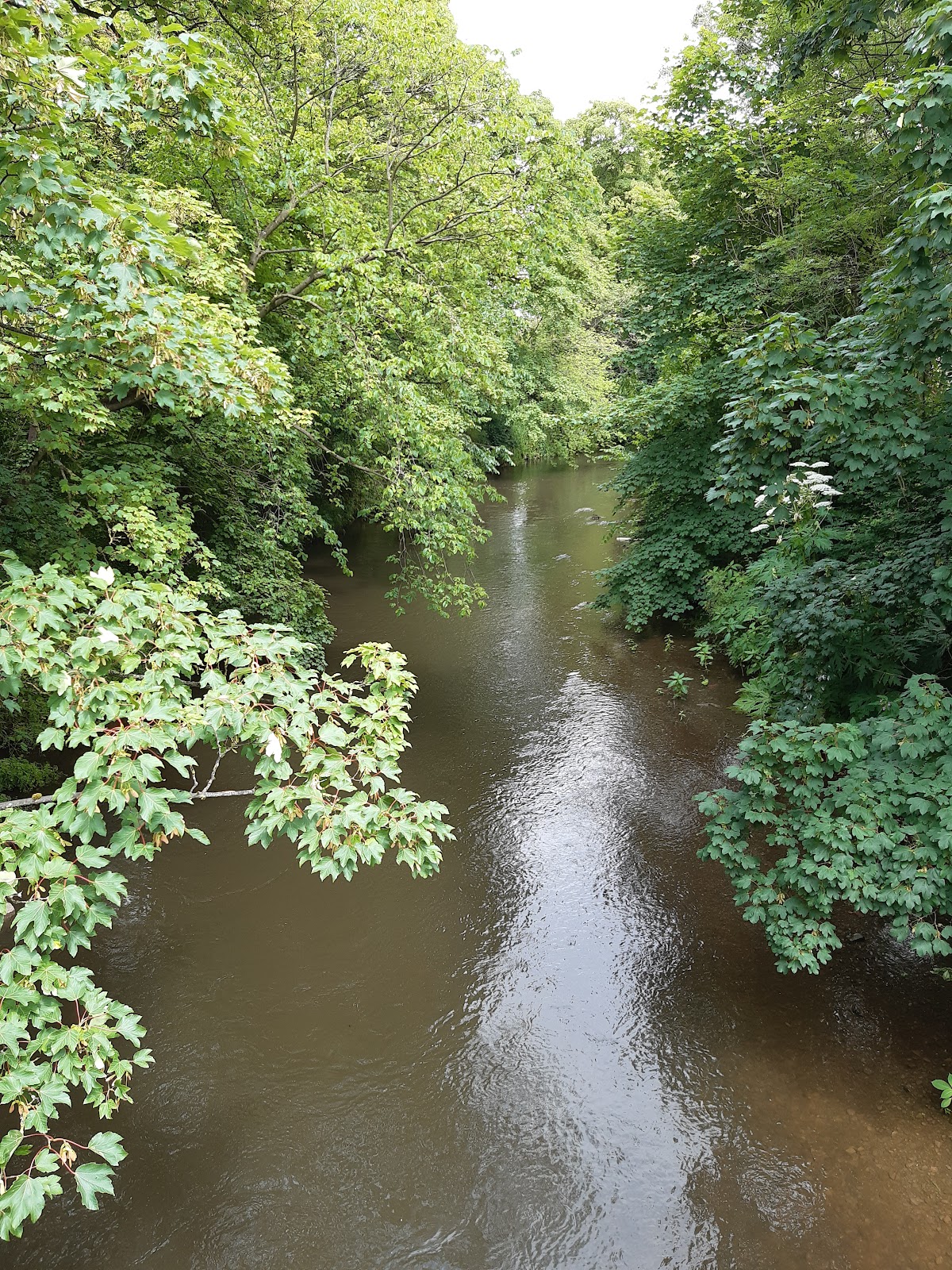
Just after the Warfarer, the road crosses the River Douglas. This is looking upsteam. At one time this was made navigable, but the canal made it superfluous.

A bit further along, this is the view looking north. The bridge on the left is the Leeds-Liverpool Canal crossing the River Douglas. At the right you can see Parbold, including the remains of a windmill, more of that later.

A short hill leads into the village of Newburgh.

Another view showing the village green.

And an old house.

The post office.

The church is behind the post office, built 1850-51.

A very elderly barn, the roof is looking decidedly tired.

A right turn takes us down Culvert Lane, which passes underneath the Leeds Liverpool Canal.

From the other side, we can get up onto the tow path - which was very muddy this time of year. This is looking west; the canal heads almost to Southport, before going south to Liverpool.

This is looking the other way a bit further along, on the outskirts of Parbold. This is where the canal crosses the River Douglas. If you recall the fourth photo, I am just left of the bridge, and in the background of the photo below is the remains of the windmill that was also on that earlier photo.

Here is a better view of the old windmill, built 1794.

The tow path flips to the other side at this point, passing this attractive cafe, which used to be a warehouse.

The canal bends sharply to the right here. Thew first sections of the Leeds-Liverpool Canal were opened in 1774 - including the section from Liverpool to here. The plan was to head north to Leyland, and then on towards Leeds, and where the boat is moored is as far as they got.

However, a spur was built, possibly called the Junctive Canal, to serve the coal fields of Wigan.
Then the American War of Independence happened, and further work stalled. In the interim, the Lancaster Canal was built, the southern section going from Wigan to Walton Summit, and the Leeds Liverpool was connected to that at Wigan. The Wigan spur became the main canal.
This is where the A5209 crosses the canal, and looks to be the original bridge from ca. 1774. Traffic lights are required as it is not wide enough for two lanes of traffic.

And that brings us pretty much back to the start.


Comments
Post a Comment