Garstang
Garstang is a small town half way between Preston and Lancaster. The West Coast Mainline passes it to the east and the A6 to the west, and our walk started near to where where the A6 crosses the Lancaster Canal.
Canal
So here is the bridge that takes the A6 over the canal.

The canal is crossed by an aqueduct nearby. This is the pipe bringing drinking water to the Fylde from the Pennines, and as it indicates was built in 1923. Prior to that Blackpool got its water from aquifers beneath the town. Behind it is the A6 bridge again.

The bridge that takes Moss Lane over the canal. A nasty one in the car; only one vehicle at a time, you can see nothing of the road ahead.

Kepple Lane Bridge.

There is a canal basin which had wharves on either side at one time. A warehouse, possibly a tithe barn, is now a pub called Th'Owd Tithe Barn, and looked popular on this sunny afternoon.

The canal then narrows to cross the River Wyre.

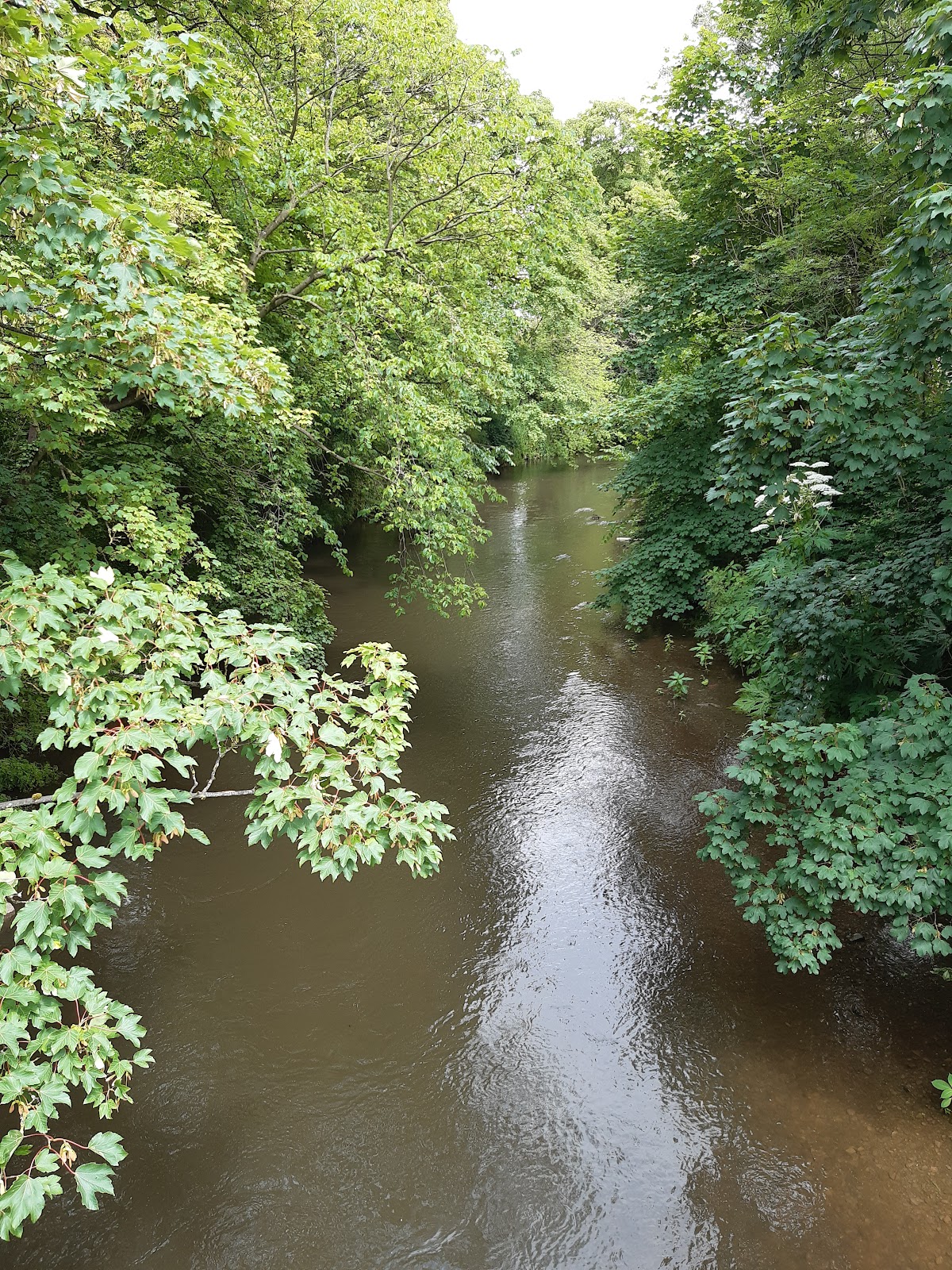
The view from the aqueduct looking west, down the river, as it heads to Fleetwood and the sea.

River
We walked down from the canal to the river. This is the aqueduct from the river. Built in 1797, it carries the canal 34 foot above the river.

Looking up river from under the aqueduct.

This bridge takes Bridge Street across the river. I would guess this was the original A6 road heading south from Garstang. The original bridge was built in 1492. It was rebuilt in 1629, renewed in 1756 and widened in 1829 and 1929.

We crossed the river on the bridge, then continued along the river, now on the north side. This is looking back over the river.

Another view over the river, looking more to the east, and the forest of Bowland.

There are some remains of a castle just outside Garstang, somewhere to the right of that view I think. It does not seem very accessible and the town does nothing to promote it.
A railway was built from Garstang to Pilling and Knott End. The hope was it would serve the salt industry, but instead most salt was pumped (as brine) to Fleetwood on the other side of the Wyre, and it was not as successful as it might. It closed to passengers in 1930, and to goods in 1965. The section from Garstang Town Station to the West Coast Mainline is still very much in evidence.

The area beyond the old railway is a flood basin. Garstang experienced severe flooding in 1980, and a flood barrier was built to control the water. This is looking down river, with the old railway bridge beyond.

Road
At this point we left the river, to walk along the roads. Looking back, however, we could see where the Fylde Water Board pipe crosses the river using an aqueduct identical to the one over the canal. The field is where Garstang Agriculture Show is held every year

We headed west along Wyre Lane, then turned left into Lancaster Road, both lined with relatively modern housing that were not that interesting, but as we go towards the town centre, that changed.
The Arts Centre, formerly the grammar school.

Barnacre View cottages are early eighteenth century. I was surprised to find they are not listed..

The Crown Hotel.

The main street. The white building that is most prominent was built in 1741.

The Kings Arms.

The Eagle and Child. The name is probably derived from the crest of the Earl of Derby, who owned much of Lancashire; there are at least four others with the same name in the county.

The Market House, originally the town hall, built between 1755 and 1764.

The Royal Oak and, on the right, the market cross. This was the principle posting inn, and apparently Sir Walter Scott stayed here in 1828. The road to the left is Bridge Street again.

The Farmers Arms. Formerly the Shovel and Broom, it changed its name around 1868.

The Wheatsheaf, built in the eighteenth century.

And finally the Methodist Church.

It is not a big town, but it has a lot of historic buildings, and the canal and river made for a very pleasant walk.


Comments
Post a Comment